Lady Pink
https://en.wikipedia.org/wiki/Lady_PinkBorn: 1964, Ambato, Ecuador Nationality: Ecuadorian-American Style: Graffiti Art, Street Art Influences: New York City subway graffiti, feminism, hip-hop culture Major Exhibitions: "Subway Art" (1980s), "Women on the Walls" (1983) Quote: "Graffiti is the voice of the people who don't have a voice." Website: https://www.instagram.com/ladypinknyc/
Notable Artwork
Various subway car murals (1979-1985)
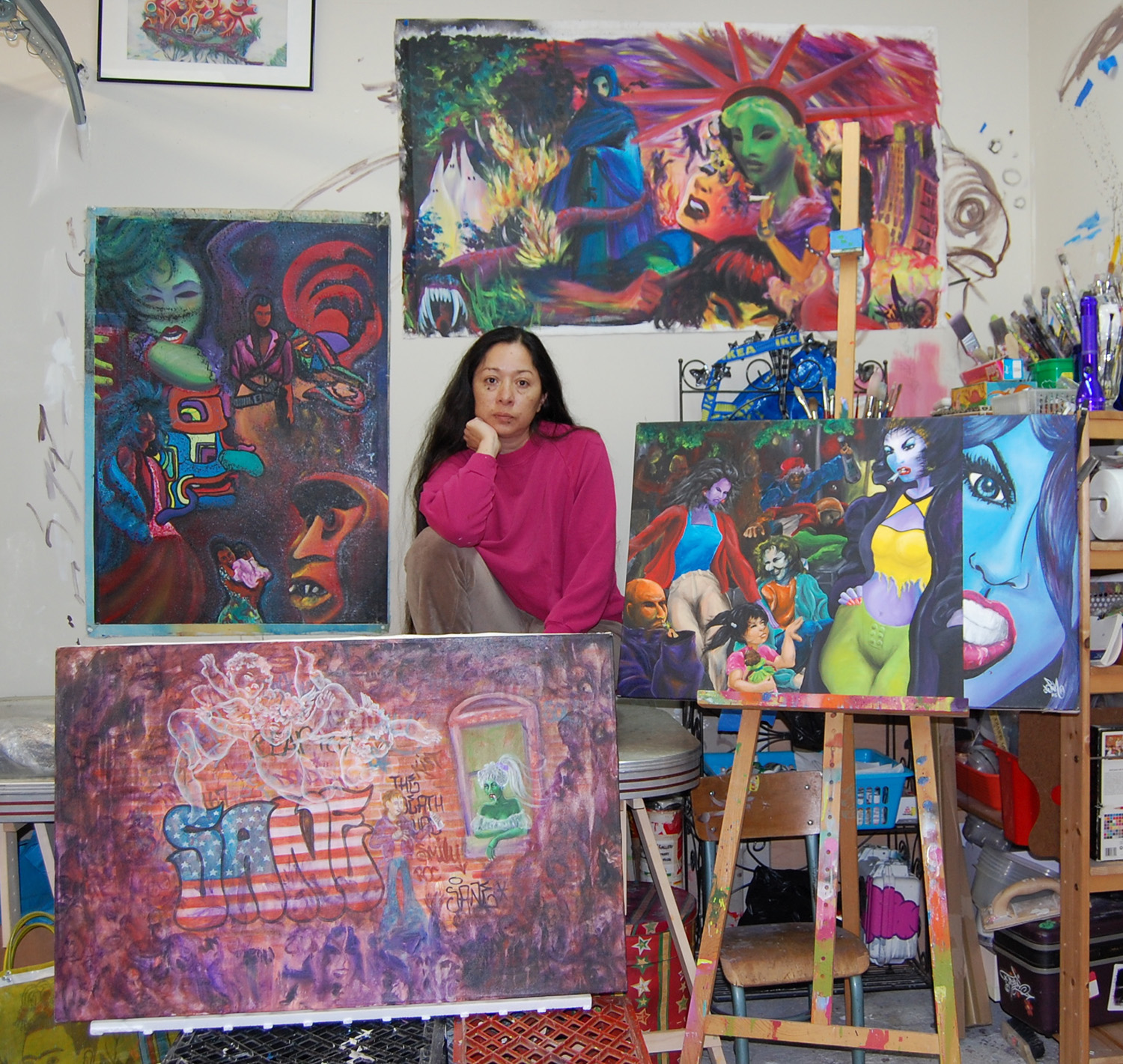
About Lady Pink
Born: 1964, Ambato, Ecuador
Nationality: Ecuadorian-American
Style: Graffiti Art, Street Art
Influences: New York City subway graffiti, feminism, hip-hop culture
Major Exhibitions: "Subway Art" (1980s), "Women on the Walls" (1983)
Quote: "Graffiti is the voice of the people who don't have a voice."
Website: https://www.instagram.com/ladypinknyc/
Notable Artwork: Various subway car murals (1979-1985)
Lady Pink (Sandra Fabara) was one of the few women active in the early New York City graffiti scene. She is known for her large-scale murals on subway trains, often featuring bold lettering, female characters, and themes of female empowerment.
Significance
Lady Pink is a pioneering figure in graffiti art, breaking barriers in a male-dominated subculture. Her work on subway trains, a highly visible and contested space, made a powerful statement about female presence and artistic expression. She helped pave the way for other women in the street art world.